

There are significant differences between split electromagnetic flowmeters and integrated electromagnetic flowmeters in multiple aspects, including structure, installation method, communication signal, and application scenarios.
1. Structural differences
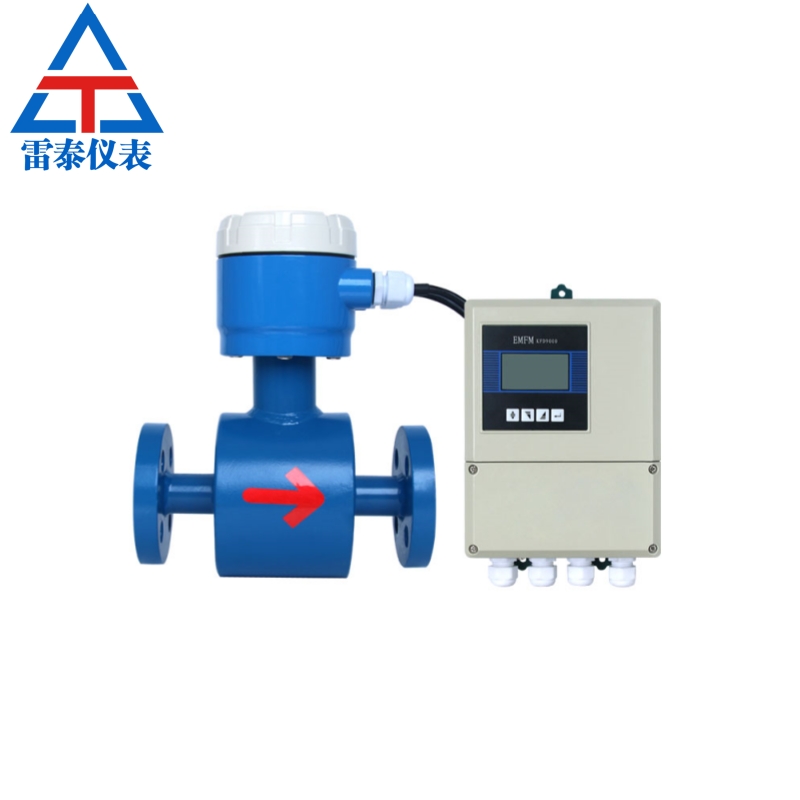
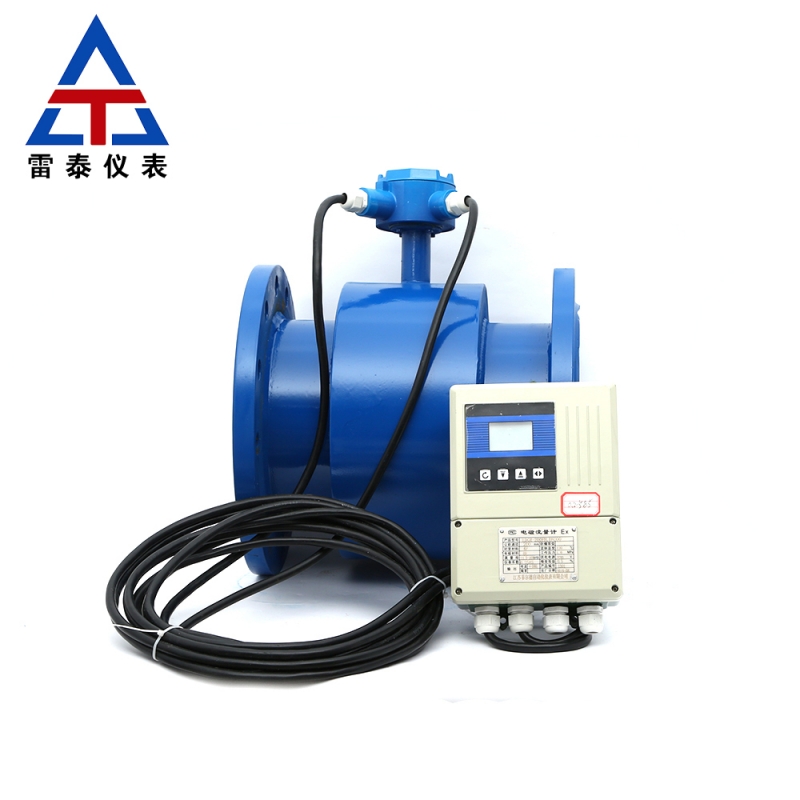
Split type electromagnetic flowmeter: composed of two parts: sensor and converter. Sensors are installed on measuring pipelines to detect fluid flow, while converters are installed at a fixed distance from the sensors (usually no more than 100 meters) to receive, process, display, and output signals from the sensors. This structure allows sensors and converters to be flexibly arranged and combined according to actual needs.
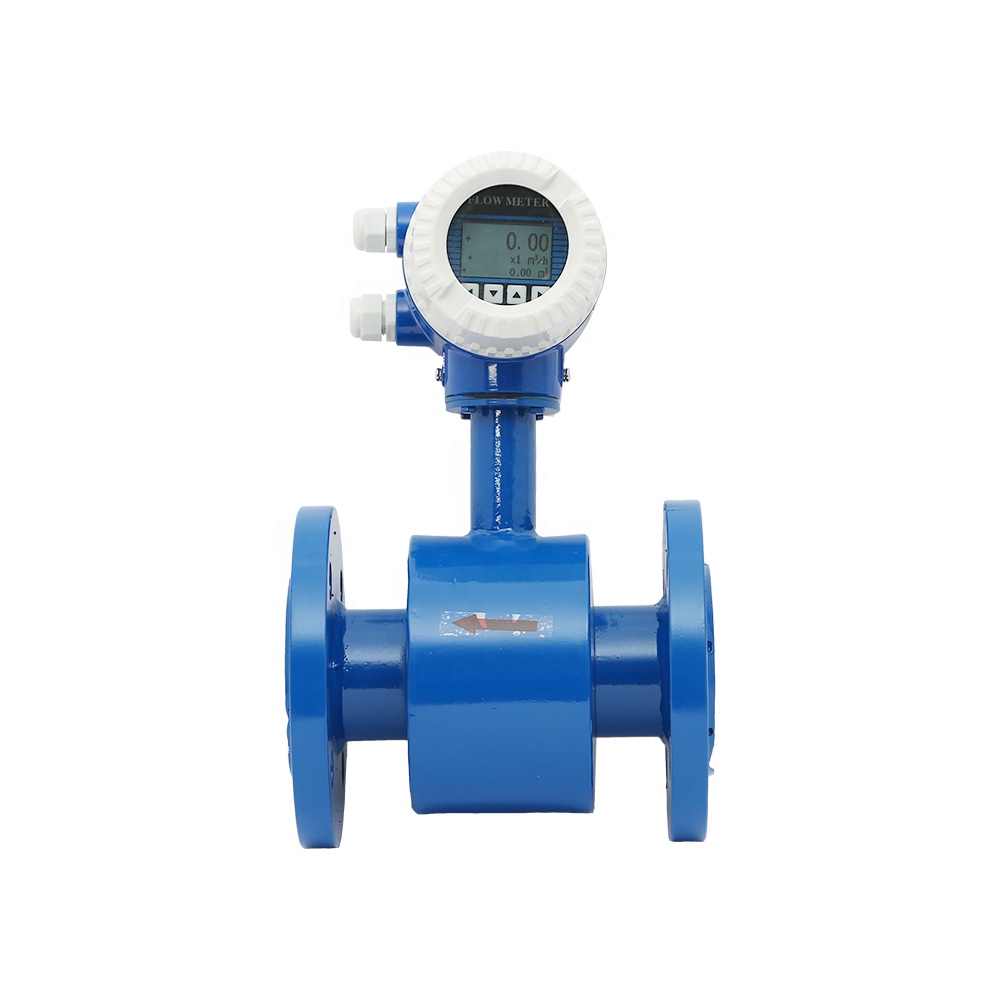
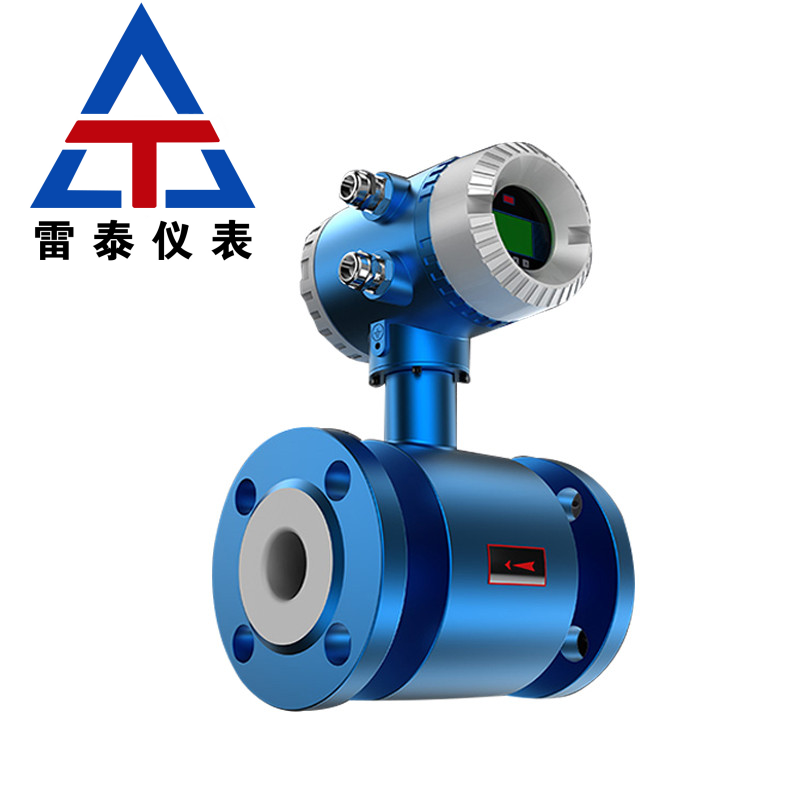
Integrated electromagnetic flowmeter: combines the sensor and converter into one, forming a unified structure. This compact structure reduces the installation workload of pipelines and simplifies the installation and maintenance process.
2. Installation method
Split type electromagnetic flowmeter: During installation, a sensor needs to be separately installed on the pipeline and connected to the converter through a cable. This installation method is relatively complex and requires more wiring work, but can be flexibly adjusted according to the on-site environment. For example, sensors can be fixed on the inside of pipelines, and cable lengths can be determined according to on-site needs, with a maximum length of up to 100 meters.
Integrated electromagnetic flowmeter: During installation, only the entire device needs to be installed on the pipeline, without additional wiring work. This installation method is simple and fast, suitable for situations with limited space or installation conditions.
3. Communication signals
Split type electromagnetic flowmeter: usually communicates with external devices through 4-20mA analog signals, RS-485 communication, etc., to achieve remote transmission and management of data. This communication method is flexible and diverse, and can be selected according to different application needs.
Integrated electromagnetic flowmeter: supports protocols such as Modbus and HART, and can achieve more complex data interaction with remote prepaid meter reading systems, energy consumption monitoring and management systems, and other devices. This communication method has higher data transmission efficiency and wider compatibility.
4. Application scenarios
Split type electromagnetic flowmeter: As its sensor and converter can be installed separately, it is suitable for situations where the on-site measurement environment is poor and remote display is required. For example, in environments with high temperature, high humidity, high vibration, or corrosive gases, a split type electromagnetic flowmeter can ensure the accuracy and stability of measurement data. In addition, it is widely used in industries such as petroleum, chemical, metallurgical, textile, food, pharmaceutical, papermaking, as well as in fields such as environmental protection, municipal management, and water conservancy construction.
Integrated electromagnetic flowmeter: Due to its compact structure and high communication function, it is suitable for situations with limited space and requiring a lot of data exchange. For example, in industrial automation control systems, integrated electromagnetic flow meters can be easily integrated and communicated with other devices to achieve automation control and remote monitoring.
In summary, both split type electromagnetic flowmeters and integrated electromagnetic flowmeters have their own advantages and applicable scenarios. When choosing, it is necessary to comprehensively consider factors such as the actual measurement medium, measurement requirements, and installation environment.
Our main products include electromagnetic flowmeter, turbine flowmeter, energy meter, mass flowmeter, vortex flowmeter, pressure transmitter, level meter, and magnetic flap level meter.
