

The characteristics of low-frequency radar level gauges are mainly reflected in the following aspects:
1. Transmission frequency and wavelength:
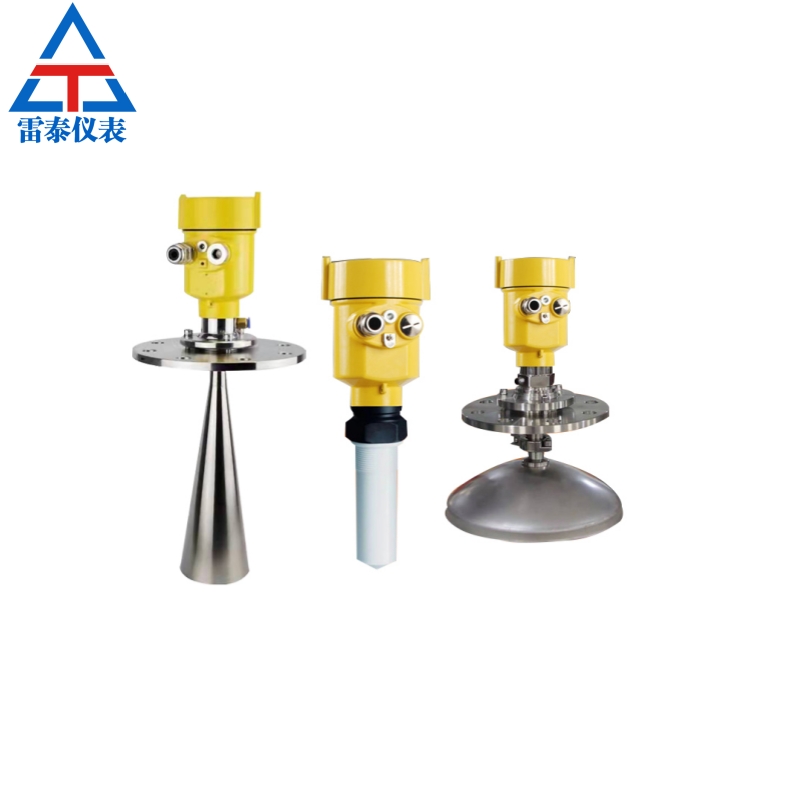
The microwave frequency emitted by low-frequency radar level gauges is usually between 100MHz and 6GHz, with a relatively long wavelength.
2. Measurement medium and application scenarios:
① Due to the longer wavelength of low-frequency radar level gauges, they are more suitable for antenna hanging and liquid level fluctuations, and are mainly used for measuring liquid media and small range applications.
② Low frequency radar level gauges are commonly used in industries such as water conservancy, chemical engineering, environmental protection, and pharmaceuticals. They are particularly suitable for measuring corrosive liquids such as water, hydrochloric acid, sulfuric acid, and nitric acid, as well as bulk solid material levels such as coal, cement, and steel (although they do not perform as well as high-frequency radar in solid measurement).
3. Resistance to steam and foam:
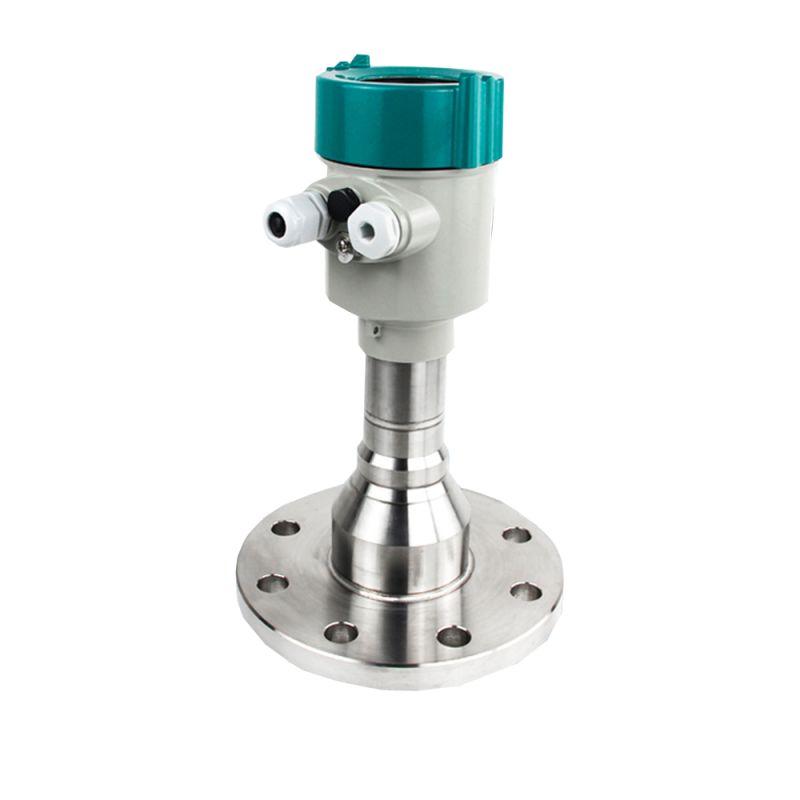
The beam angle of the low-frequency radar level gauge is wide, which can better deal with steam, dust, condensation, pollution and turbulent surface problems, and has low sensitivity to steam and foam.
4. Cost and Installation:
① In some applications, low-frequency radar level gauges may have lower costs, especially in situations where high-precision measurements are not required.
② Due to the larger antenna size of low-frequency radar level gauges, they may be easier to install and maintain for some applications.
5. Corrosion resistance and sealing design:
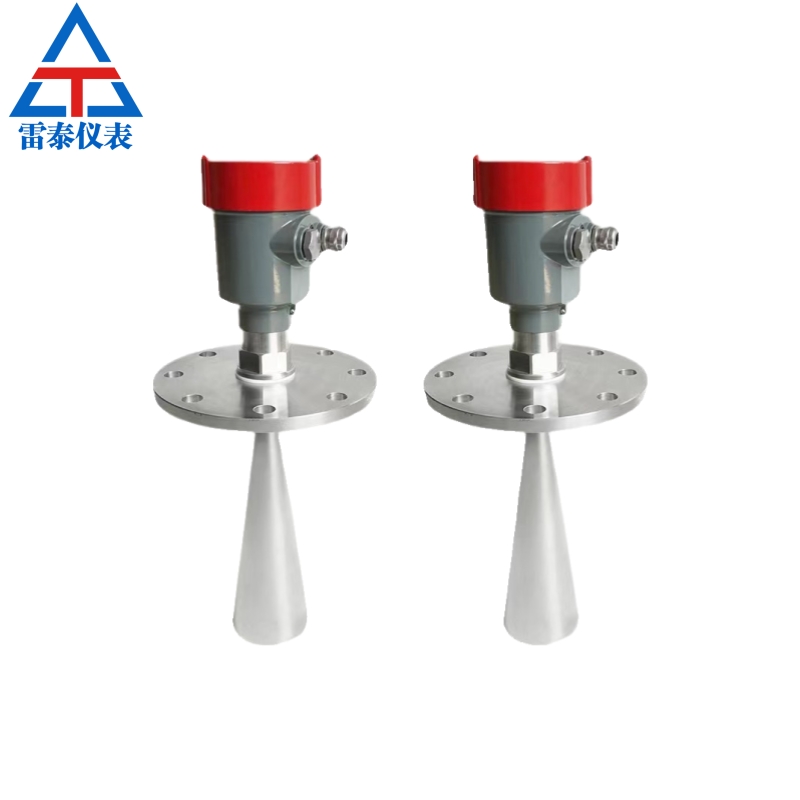
① The pole antenna of low-frequency radar level gauges often uses corrosion-resistant materials such as PP and PTFE.
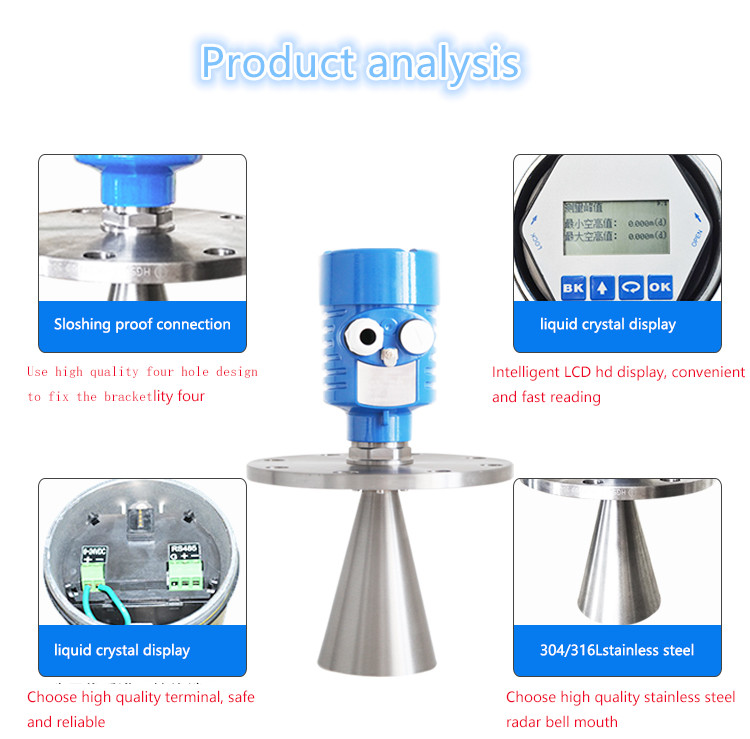
② The antenna adopts an integrated fully sealed design, suitable for steam, condensation, crystallization, and occasions with stirrers, enhancing its ability to resist pollution and corrosion.
6. Measurement performance:
① Although the accuracy of the low-frequency radar level gauge may not be as high as that of the high-frequency radar, it shows strong stability and adaptability when dealing with complex working conditions (such as steam, foam, turbulence, etc.).
② It can cope with the interference of harsh working conditions such as high temperature, high dust, and low dielectric constant, ensuring the accuracy of measurement
To sum up, the low-frequency radar level gauge plays an important role in liquid medium measurement and small range measurement because of its unique transmission frequency, wavelength, measurement medium adaptability, anti steam and foam ability, cost and installation advantages, corrosion resistance and sealing design and other characteristics.
Our main products include electromagnetic flowmeters, turbine flowmeters,mass flowmeters, vortex street flowmeters, pressure transmitters, liquid level transmitters, and magnetic flap level meters.
