

Integrated electromagnetic flowmeter is an instrument based on Faraday's law of electromagnetic induction to measure the flow rate of conductive fluids.
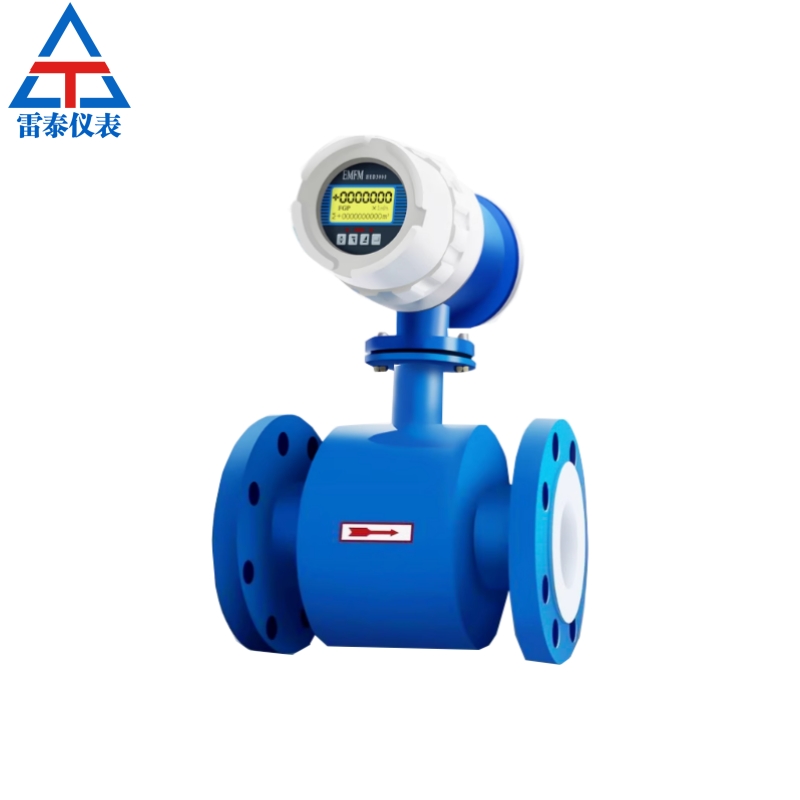
1. Structural composition:
a. Measurement catheter: generally made of high resistivity non-magnetic materials, with thin tube walls and a complete lining inside to prevent flow signals from being short circuited by the metal tube wall.
b. Magnetic circuit system: mainly composed of excitation coils, used to generate a working magnetic field, so that the conductive liquid can generate induced electromotive force when flowing in the magnetic field.
c. Electrode: Installed on both sides of the measuring tube wall perpendicular to the magnetic field, its function is to extract the flow signal generated by cutting the magnetic field lines of the measured medium. The electrode material needs to be selected according to the corrosiveness of the measured medium, and is generally a magnetic and conductive material.
d. Converter: responsible for amplifying the weak signal sent out by the flowmeter and converting it into a standard signal proportional to the average flow rate, such as a 4-20mA signal or pulse signal, for output and subsequent processing.
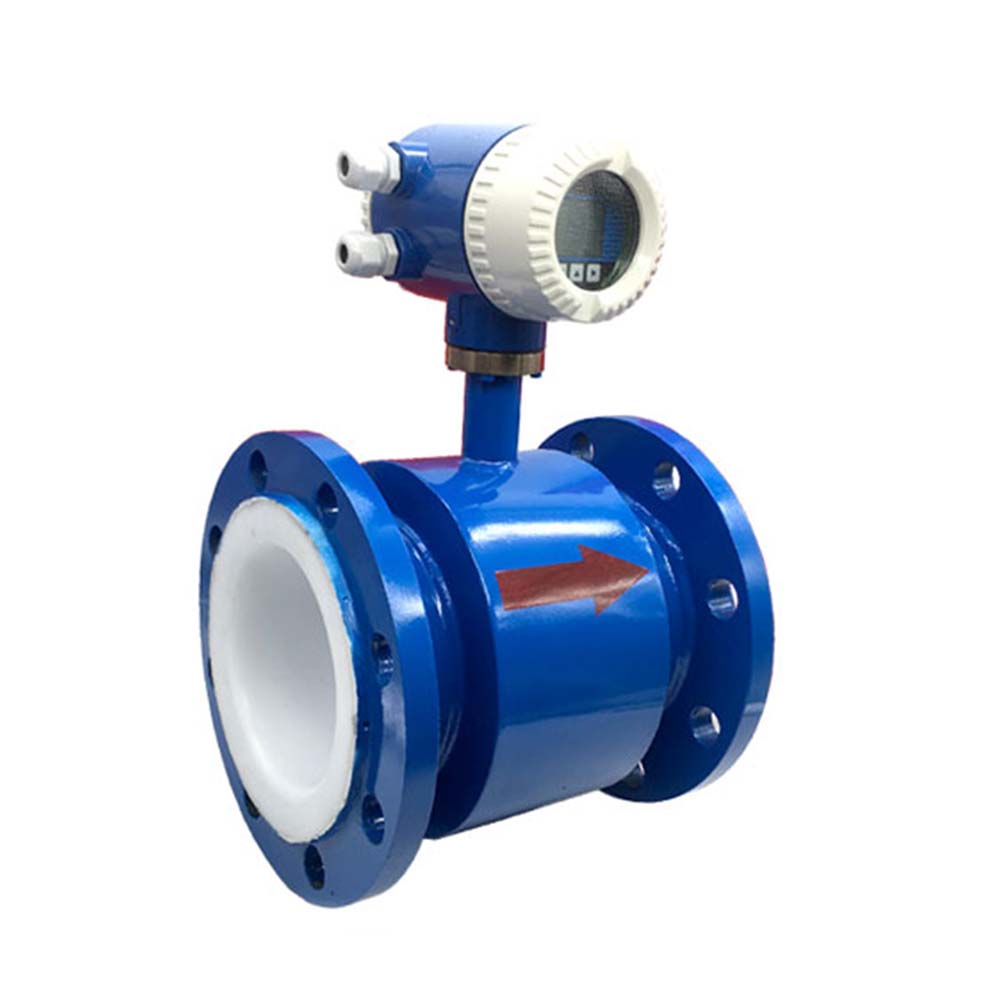
2. Performance characteristics:
a. High measurement accuracy: It can provide high-precision flow measurement and is suitable for situations that require high accuracy, such as trade settlement.
b. Good stability: Adopting non-contact measurement method avoids the wear and error problems that may exist in traditional mechanical flow meters, and its full digital processing technology and anti-interference ability are strong, ensuring the accuracy and reliability of measurement results.
c. Wide applicability: It can measure various conductive liquids, including water, sewage, acid, alkali, salt solutions, and liquids containing solid particles (such as mud, slurry, etc.), but cannot detect the flow rate of gases, vapors, and non-conductive liquids.
d. No pressure loss: There are no obstructions in the measuring pipeline, no additional pressure loss is generated, and there are no movable parts. The sensor has an extremely long lifespan.
e. Low requirements for straight pipe section: The straight pipe section required for sensors is relatively short, usually 5 times the diameter of the pipeline. Compared to some other flow meters, the requirements for pipeline layout during installation are relatively less stringent.
f. Advantages of integrated design: sensors and converters are integrated together to form a compact unit, which has the advantages of compact structure, small space occupation, easy and fast installation, simple operation and maintenance, etc. It is suitable for situations with limited space or installation conditions, and usually has relatively low cost.
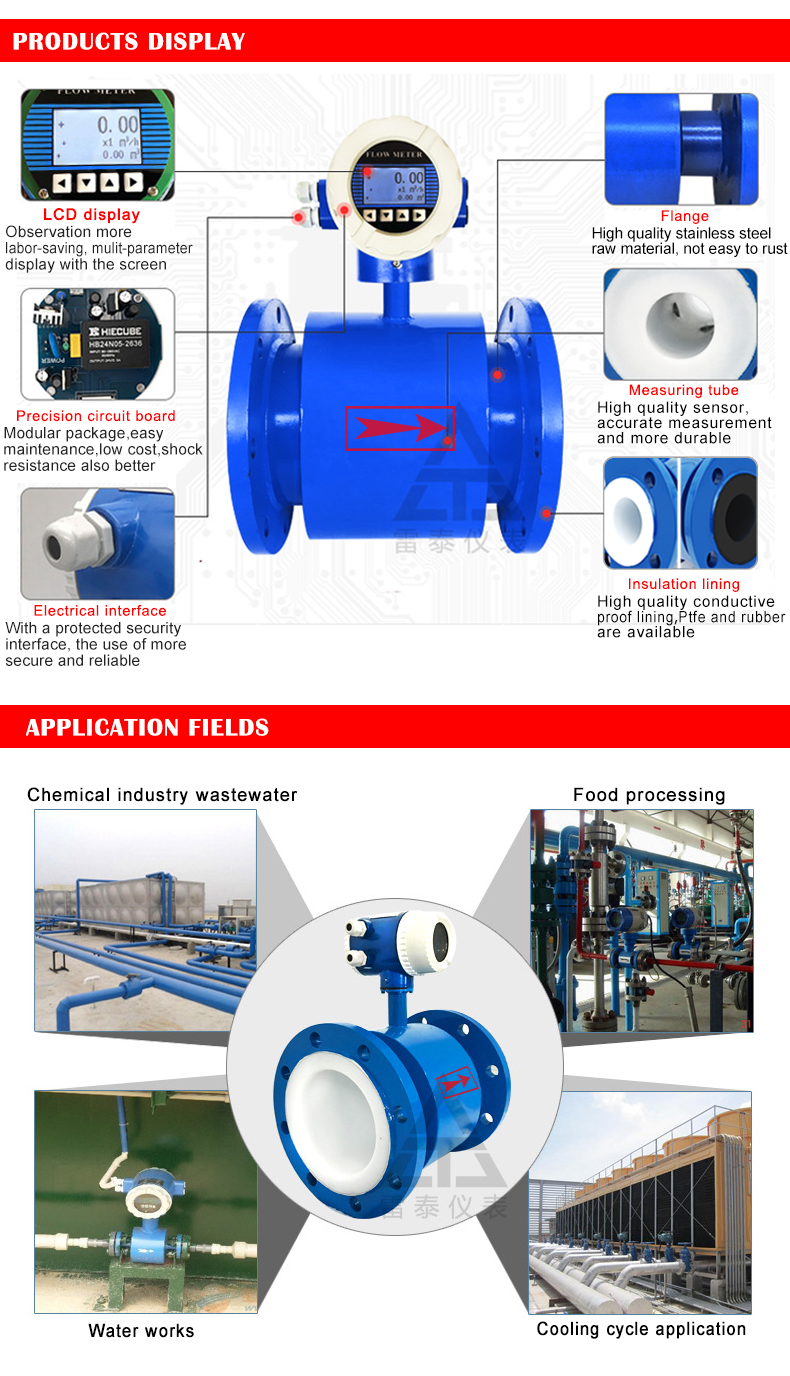
Therefore, in summary, the integrated electromagnetic flowmeter is widely used in the chemical industry, environmental protection field, water conservancy engineering, food and beverage industry, petroleum industry, etc.
Our main products include electromagnetic flowmeter, turbine flowmeter,mass flowmeter, vortex street flowmeter, pressure transmitter, liquid level transmitter, and magnetic flap level meter.
