

As a high-precision and stable flow measurement instrument, the split type electromagnetic flowmeter is widely used in multiple industry fields. To ensure the accuracy of its measurement and extend its service life, the following are the precautions for using a split type electromagnetic flowmeter:
1. Installation precautions
① Grounding treatment: The induced signal voltage of the split type electromagnetic flowmeter is very small, so it must have good grounding. The grounding ring is used to establish liquid grounding through liquid contact, while also protecting the inner lining. Good grounding can ensure that the reference potential of the sensor and the reference potential of the converter amplifier are the same as the measured liquid potential and ground potential, thereby reducing the impact of noise on the measurement results.
② Cable connection: The wiring between the sensor and the converter must use the specified shielded cable and be separately threaded in a grounded protective steel pipe, strictly separated from other power sources. Signal cables and excitation cables should be kept as short as possible to minimize interference.
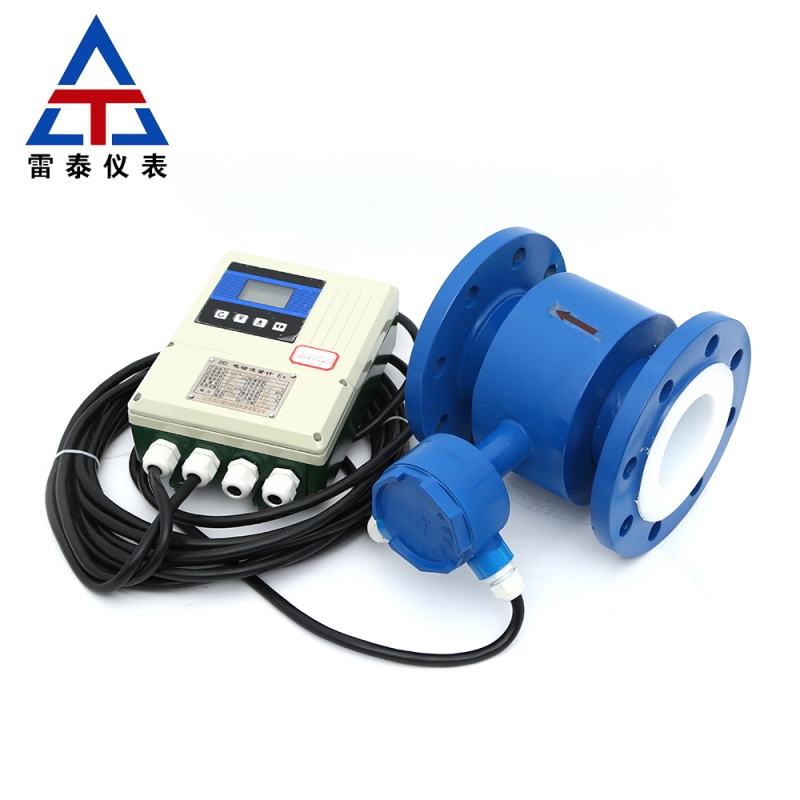
③ Installation location:
a. When installing an electromagnetic flowmeter, sufficient straight pipe sections should be ensured before and after. It is generally recommended that the front straight pipe section be no less than 10D (D is the diameter of the pipeline) and the rear straight pipe section be no less than 5D to ensure the full development of the fluid flow state.
b. Avoid installation in areas with strong vibration and corrosive gases to prevent damage to the insulation between electrodes and pipelines.
c. It is best to install indoors. If it must be installed outdoors, it should be protected from rainwater, waterlogging, and direct sunlight. Moisture and sun protection measures should be taken.
d. Avoid installation in places with large temperature changes or high temperature radiation from equipment. If installation is necessary, insulation and ventilation measures must be taken.
e. Avoid installation in environments containing corrosive gases. When installation is necessary, ventilation measures must be taken
Strong magnetic fields and vibration sources should be avoided. If the pipeline vibration is large, there should be fixed pipe supports on both sides of the flowmeter.
④ Convenient maintenance: Stop valves or bypass pipelines should be installed before and after the instrument to facilitate its installation, disassembly, and maintenance.
2. Wiring and debugging
① Power wiring: Connect the power cord of the electromagnetic flowmeter to the power switch and ensure that the power switch is connected to a stable AC power source to ensure stable power supply.
② Ground connection: Connect the ground wire terminal of the electromagnetic flowmeter to the ground wire of the equipment to improve safety and measurement accuracy.
③ Signal line wiring: Connect the signal line of the electromagnetic flowmeter to the display instrument, paying attention to connecting the positive pole to the positive pole and the negative pole to the negative pole, ensuring that the wiring is firm and the signal transmission is smooth.
④ Parameter setting: Enter the parameter setting interface through the menu bar on the instrument, and set parameters such as flow unit, temperature unit, density unit according to on-site requirements to ensure the accuracy of measurement results.

3. Use and maintenance
① Calibration operation: Calibration is an important step to ensure the accuracy of electromagnetic flowmeter measurement. Before calibration, a flow meter with a known flow rate value should be prepared as a reference. Measure the flow rate using a reference flowmeter, while measuring the flow rate using an electromagnetic flowmeter. Then compare the differences between the two and adjust the calibration factor of the electromagnetic flowmeter based on the magnitude of the differences.
② Formal measurement: Turn on the switch of the electromagnetic flowmeter and wait for the fluid to flow through the pipeline through the electromagnetic flowmeter. The instrument will display the real-time flow value. As needed, flow values and other related parameters can be recorded.
③ Remote monitoring: If long-term monitoring is required, the electromagnetic flowmeter can be connected to the data acquisition system to achieve remote monitoring and data analysis.
④ Regular inspection: Regularly check the appearance, connection lines, and sensor status of the electromagnetic flowmeter to ensure that there is no damage or looseness.
⑤ Cleaning and Protection: Regularly clean sensors and converters to avoid dust and dirt affecting measurement accuracy. At the same time, pay attention to the protection level of the equipment to ensure that it can work normally even in harsh environments.
4. Safety precautions
① During installation and use, relevant safety regulations should be followed to ensure the safety of personnel and equipment
② Electromagnetic flow meters should be installed in places without strong magnetic field interference to ensure the accuracy of measurement results.
③ When setting and calibrating parameters, carefully read the instructions and operate according to the requirements.
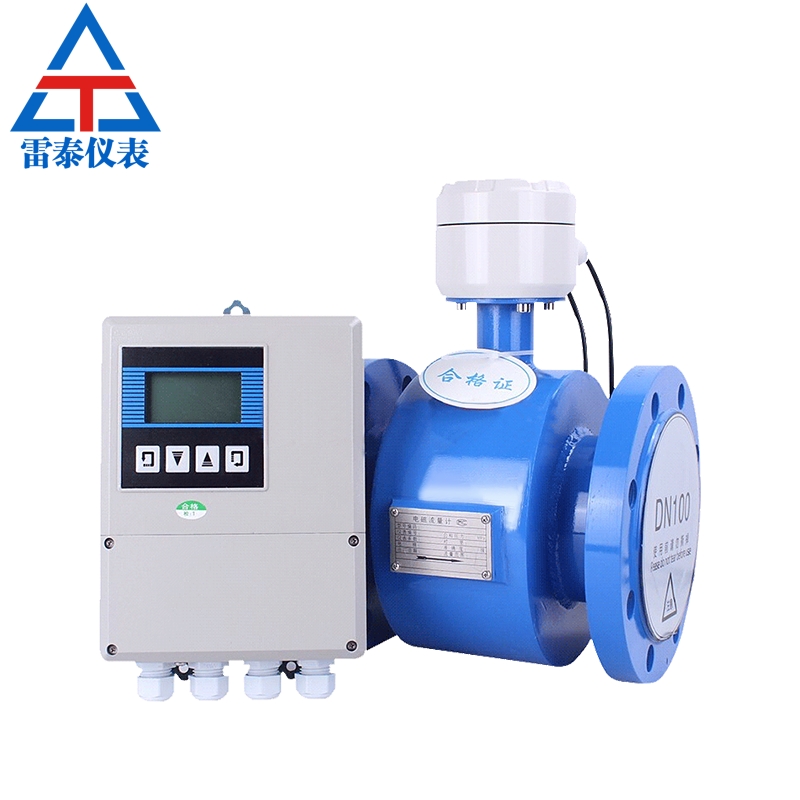
In summary, when using a split type electromagnetic flowmeter, attention should be paid to multiple aspects such as installation, wiring and debugging, use and maintenance, and safety. Only by operating according to standards can the accuracy of measurements be ensured and the service life of equipment be extended.
Our main products include electromagnetic flowmeter, turbine flowmeter,mass flowmeter, vortex street flowmeter, pressure transmitter, liquid level transmitter, and magnetic level indicator.
