

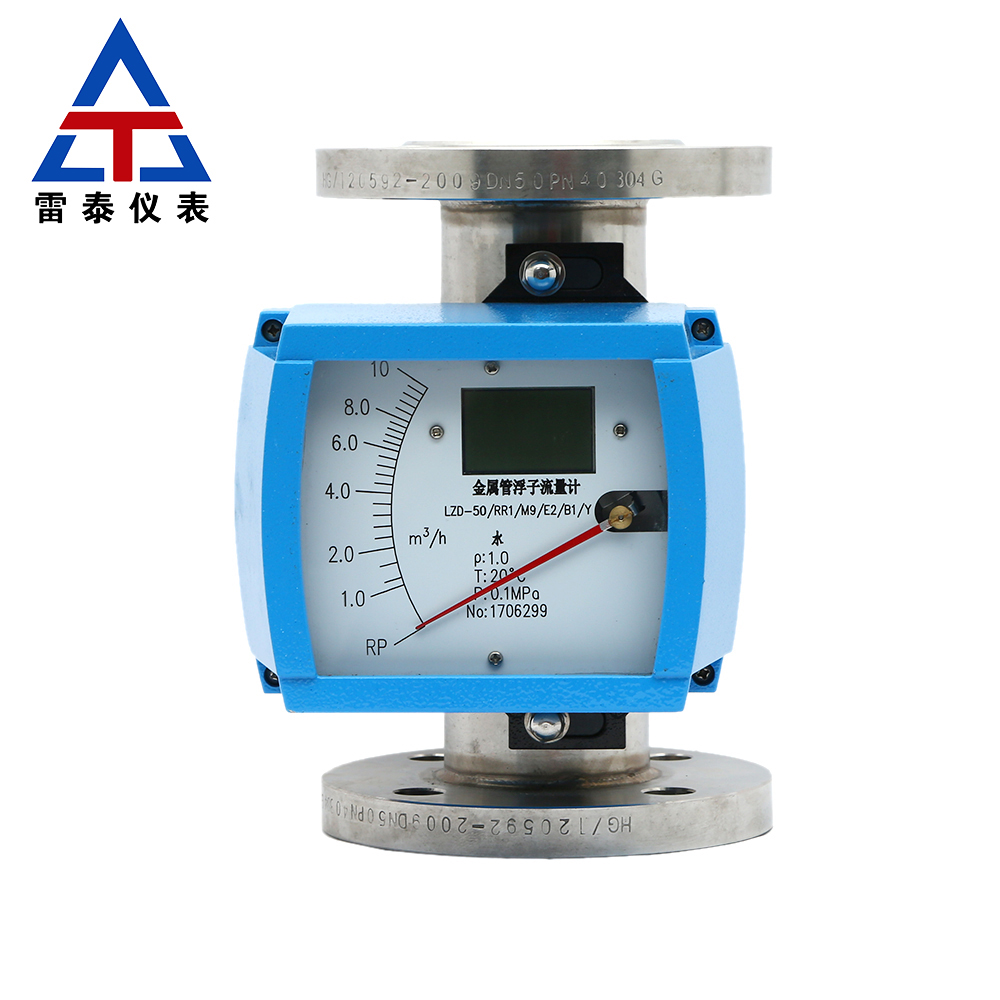
Metal tube rotameter is a commonly used flow measurement device, mainly used to measure the flow rate of liquids or gases in pipelines. Its characteristics can be summarized from the following aspects:
1. Measurement principle and structure
① Variable area measurement principle: The metal tube rotameter adopts the variable area measurement principle, and the float moves up and down in the measuring tube with the change of flow rate. When the buoyancy and gravity of the float reach equilibrium, the flow gap area between the float and the orifice plate (or cone tube) remains constant
The annular gap area is directly proportional to the rising height of the float, that is, the position where the float rises in the measuring tube represents the magnitude of the flow rate.
② All metal structure: The flowmeter has a sturdy all metal structure, suitable for measuring high temperature, high pressure, and highly corrosive media.
2. Functions and Features
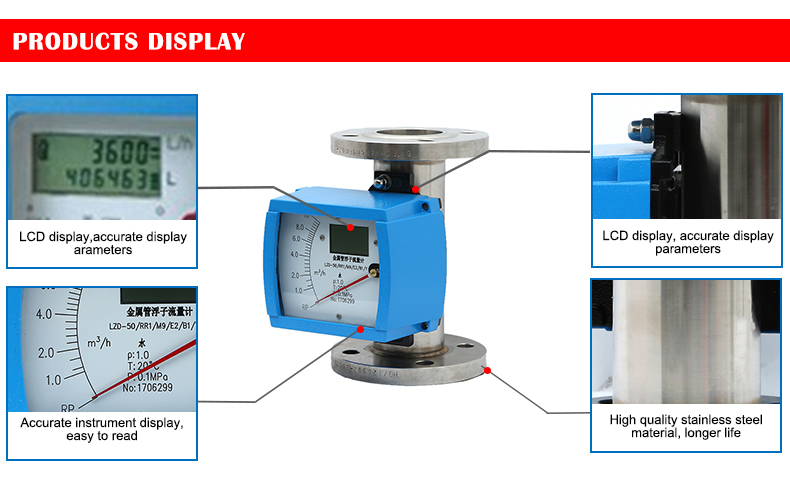
① Multiple types and functions: There are various types of metal tube float flowmeters, including indicator type, electric remote transmission type, corrosion-resistant type, high-pressure type, jacket type, explosion-proof type, etc., with standard analog signal output of 0-10mA and 4-20mA and on-site indication function. At the same time, it can also achieve functions such as cumulative flow display, digital communication, and on-site modification of measurement parameters.
② High precision and stability: Metal tube rotameter has high measurement accuracy and stability, especially suitable for low flow rate and small flow medium flow measurement.
③ Wide measurement range: The metal tube rotameter is suitable for measuring small diameters and low flow rates, with a wide measurement range that can be selected according to actual needs.
④ Low pressure loss: This flowmeter adopts a low pressure loss design, which can reduce energy consumption and fluid loss.
⑤ Multiple power supply methods: The metal tube rotameter can be selected from wire, battery, and AC power supply methods, making it convenient for users to choose according to their actual needs.
3. Application scenarios and advantages
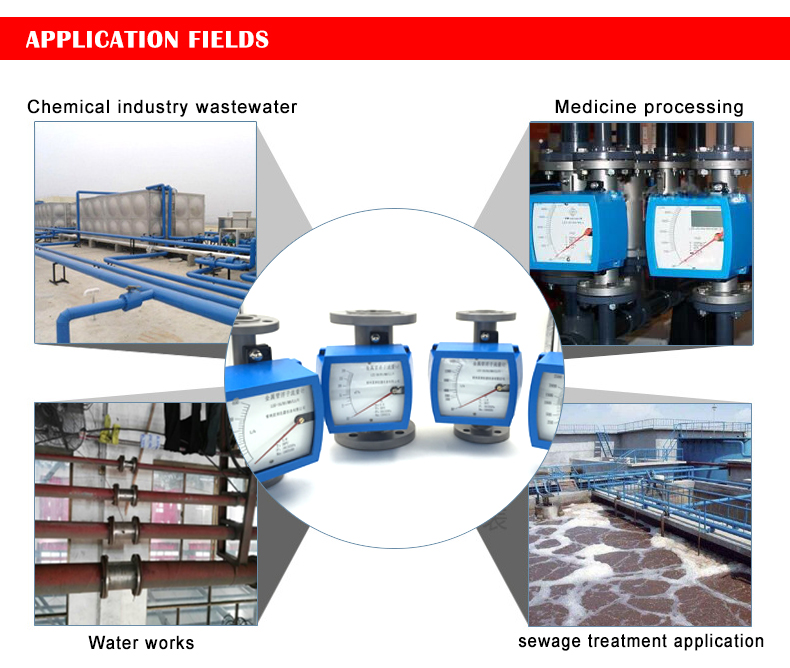
① Application scenarios: Metal tube rotameters are widely used in fields such as petroleum, chemical, power generation, pharmaceuticals, food, water treatment, etc., especially in flow measurement processes under complex, harsh environmental conditions and various medium conditions
② Advantages: The metal tube rotameter has the characteristics of small volume, large detection range, and easy use. In addition, it also has the advantages of concise reading, high pressure resistance, high temperature resistance, and strong sense of security, especially suitable for flow measurement of opaque and corrosive media.
4. Other characteristics
① Magnetic coupling transmission: The metal tube rotameter adopts a non-contact magnetic coupling transmission method to ensure data transmission and signal stability.
② Data recovery and backup: Some metal tube rotameters also have data recovery and backup functions, as well as power down protection functions, which improve the reliability and security of data.
In summary, metal tube rotameters have various types and functions, high precision and stability, wide measurement range, low pressure loss, multiple power supply methods, as well as a wide range of application scenarios and advantages. These characteristics make metal tube rotameters play an important role in industrial automation process control.
We specialize in producing electromagnetic flowmeter, vortex street flowmeter, spiral vortex flowmeter, turbine flowmeter, liquid gas mass flow meter, metal tube rotameter, orifice flowlmeter, ultrasonic flowmeter, verabar flowmeter, target type flowmeter, magnetic level indicator, differential pressure transmitter, etc.
