

1. No traffic output
① Power supply issues: Insufficient power supply voltage, power circuit board failure, blown fuses, etc. can cause abnormal power supply to the instrument.
Connection issue: Cable damage, loose connection or poor contact, resulting in signal transmission failure.
② Media and installation issues: The pipeline is not filled with liquid, the direction of liquid flow does not meet the requirements of the instrument, and the sensor installation position is improper, all of which can prevent the instrument from measuring correctly.
③ Component damage: Sensor electrodes, excitation coils, and other components are damaged, or converter components are malfunctioning, making it impossible to generate or process flow signals.
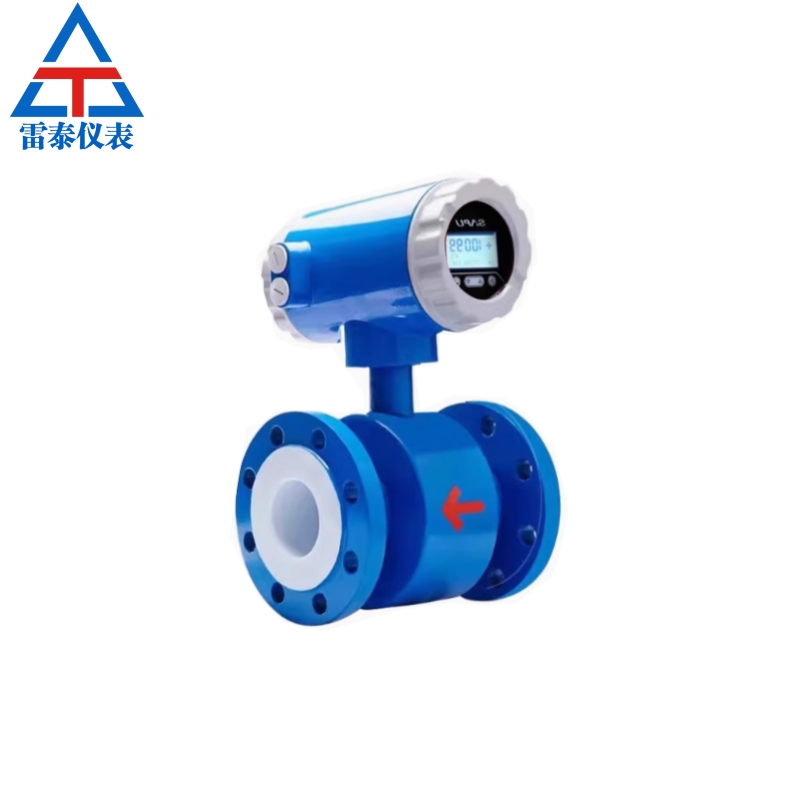
2. Output numerical fluctuations
① External interference: Large electrical equipment and welding machines nearby generate strong magnetic fields, radio waves, and other electromagnetic interference, which affects signal transmission.
② Pipeline and liquid issues: The pipeline vibrates greatly, causing the flowmeter circuit board to loosen; There are bubbles in the liquid or the pipeline is not filled with liquid, resulting in unstable measurement.
③ Electrical connection issues: terminal oxidation and poor contact on the circuit board, resulting in unstable signal transmission.
3. Zero drift
① Sensor issues: Aging of internal coils, decreased insulation performance, or electrode contamination or corrosion, causing changes in measurement standards.
② Environmental and installation issues: significant temperature changes without effective compensation; Improper installation position, sensor not in sufficient contact with fluid or subject to external interference.
③ Liquid characteristic issues: Uneven liquid conductivity, presence of small flow, etc., affect the stability of the zero point.
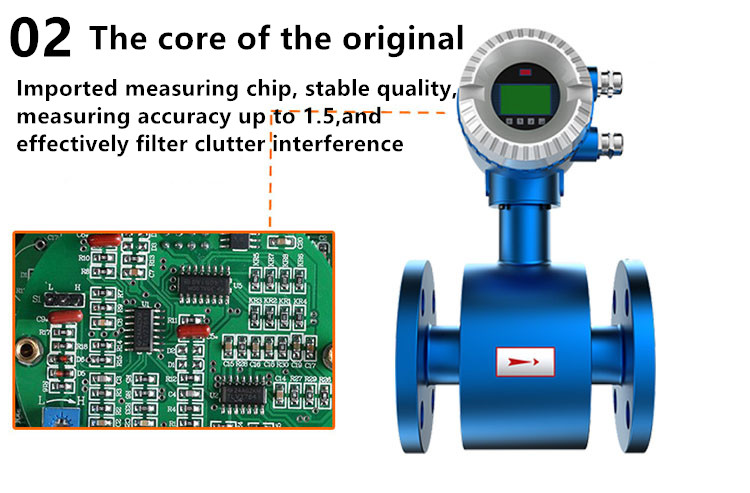
4. Inaccurate measurement values
① Parameter setting issue: The parameter settings of the converter are incorrect, such as instrument constants, ranges, etc., resulting in measurement result deviation.
② Installation issue: The upstream flow condition of the sensor does not meet the requirements, such as insufficient length of the straight pipe section, or the distance between the flow blocking components such as the regulating valve and the sensor is too close.
③ Changes in medium properties: Changes in the density, viscosity, and other characteristics of the measured liquid can affect measurement accuracy.
④ Signal cable problem: The insulation performance of the signal cable decreases and is interfered with, causing distortion of the transmitted signal.
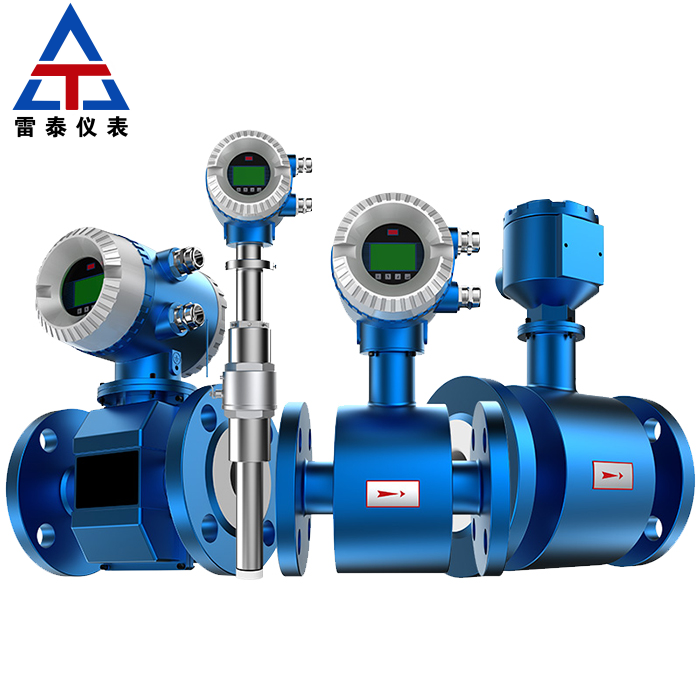
5. Instrument damage or alarm
① Header malfunction: The header does not light up when powered on and displays a yellow screen, which may be due to power issues, damaged fuse, or malfunction of the header itself.
② Excitation alarm: open circuit in excitation wiring, abnormal resistance in excitation coil, or converter failure.
③ Air traffic control alarm: The measurement tube is not filled with fluid, the fluid conductivity is low, the air traffic control threshold and range are set incorrectly, the signal connection is incorrect, or the electrode is faulty.
④ Upper or lower limit alarm: If the output current or frequency exceeds the set upper or lower limit value, it may be due to unreasonable process range setting or actual flow exceeding the range.
We specialize in producing electromagnetic flowmeter, vortex street flowmeter, turbine flowmeter, thermal gas mass flowmeter, metal tube rotameter, orifice flowlmeter, ultrasonic flowmeter, verabar flowmeter, target type flowmeter, magnetic level indicator, differential pressure transmitter, etc.
