

The accuracy levels of oxygen pressure gauges usually include 1.0, 1.6, 2.5, etc. Oxygen pressure gauges with different accuracy levels are suitable for the following different scenarios:
1.1.0 level high-precision oxygen pressure gauge
Applicable scenarios: Mainly used in situations where high precision is required for oxygen pressure measurement, such as aerospace, scientific research laboratories, high-end medical equipment, and other fields. In aerospace, high-precision pressure gauges are required for monitoring the pressure of aircraft oxygen systems to ensure the safety of astronauts and the smooth progress of flight missions; In scientific research laboratories, when conducting precise experiments related to oxygen, a 1.0 level precision oxygen pressure gauge can provide accurate data support; In high-end medical equipment, such as advanced ventilators and hyperbaric oxygen chambers, precise control of oxygen pressure is required to ensure the effectiveness and safety of patient treatment.
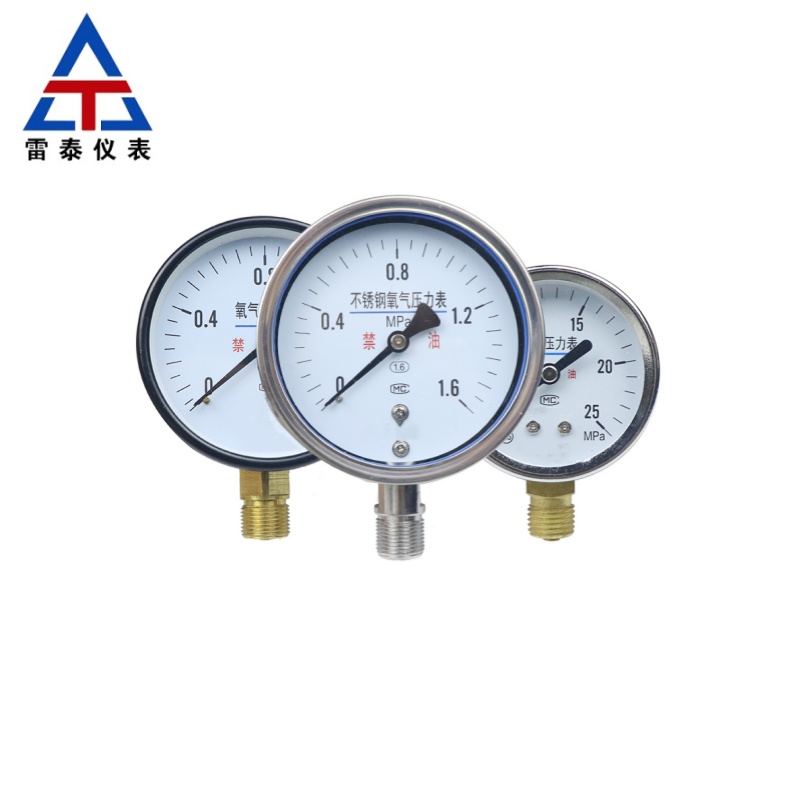
2.1.6 level medium precision oxygen pressure gauge
Applicable scenarios: Suitable for most industrial production and general medical facilities. In industrial fields such as chemical, steel, and power industries, pressure monitoring is used for oxygen production, storage, and transportation processes, which can meet the general accuracy requirements for oxygen pressure measurement and ensure the safety and stability of the production process; In general medical settings, such as wards and operating rooms in ordinary hospitals, pressure monitoring of oxygen supply systems is used. A 1.6-level precision oxygen pressure gauge can provide patients with safe and stable oxygen supply.
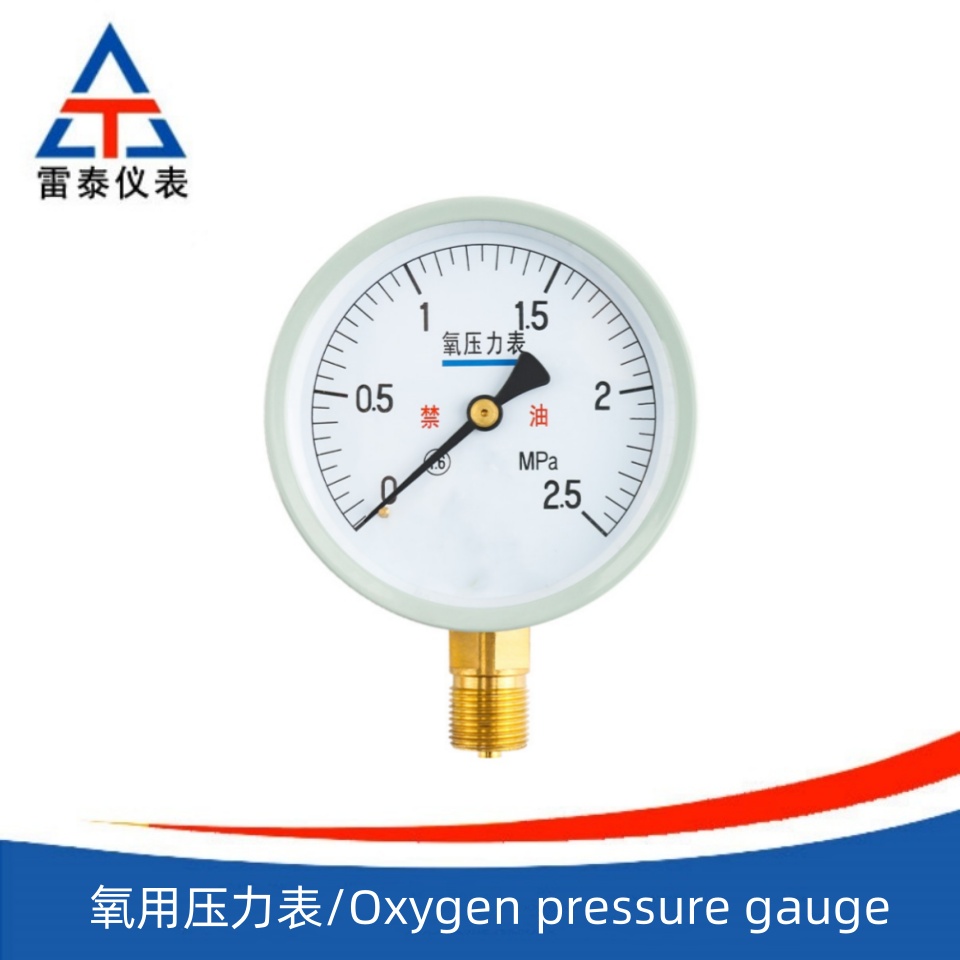
3.2.5 level lower precision oxygen pressure gauge
Applicable scenarios: Usually used in simple situations where the accuracy of oxygen pressure measurement is not high, such as small oxygen filling stations, industrial auxiliary systems with relatively relaxed oxygen pressure requirements, etc. In small oxygen filling stations, the main purpose is to roughly control the oxygen filling pressure, and a 2.5-level precision oxygen pressure gauge can meet basic filling requirements; In some industrial auxiliary systems, such as for processes such as blowing and displacement that do not require strict oxygen pressure, using a 2.5-level precision oxygen pressure gauge can reduce costs while also meeting the basic needs of the process.
We specialize in producing electromagnetic flowmeter, vortex street flowmeter, turbine flowmeter, thermal gas mass flowmeter, metal tube rotameter, orifice flowlmeter, ultrasonic flowmeter, verabar flowmeter, target type flowmeter, magnetic level indicator, differential pressure transmitter, etc.
