
1. Fluid propulsion and rectification acceleration: When gas fluid flows into the flowmeter, it first passes through the integrated rectifier at the inlet. The function of a rectifier is to rectify and accelerate the gas, allowing it to flow towards the turbine in a stable and uniform state, eliminating possible airflow disturbances and creating conditions for subsequent accurate measurements.
2. Turbine rotation: Under the action of gas after rectification and acceleration, due to the angle between the turbine blades and the fluid flow direction, the impulse of the gas will cause the turbine blades to generate rotational torque. When this rotational torque overcomes the friction torque of components such as bearings and fluid resistance torque, the turbine begins to rotate. Within a certain flow range, the angular velocity of turbine rotation is proportional to the volumetric flow rate of the fluid.
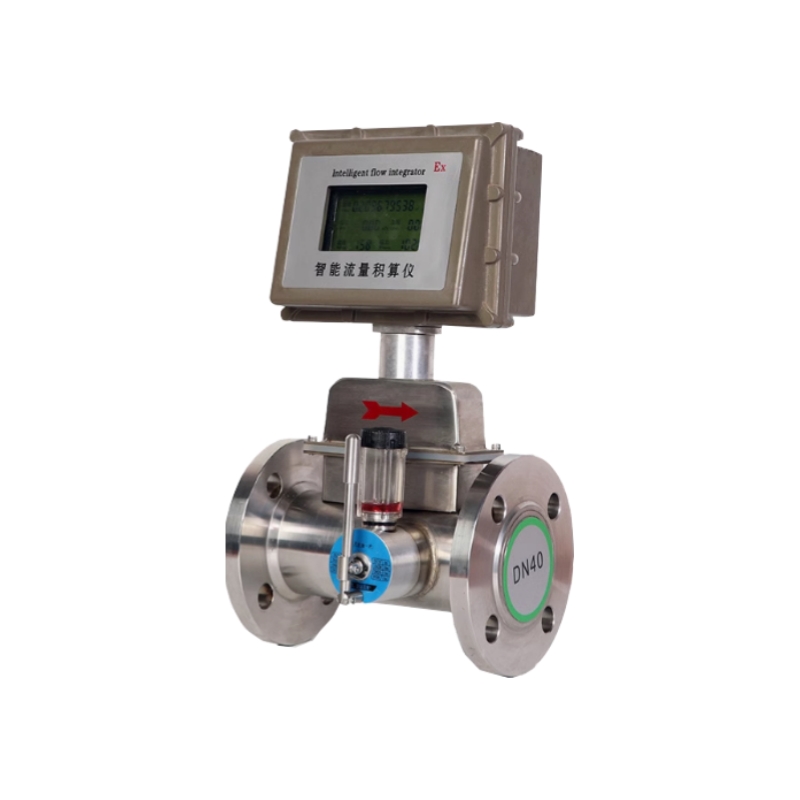
3. Signal induction: According to the principle of electromagnetic induction, a signal wheel is installed at the coaxial position of the turbine, and Wiegand sensors or magnetic sensors are installed next to the signal wheel. When the turbine drives the signal wheel to rotate together, the sensor will sense the rotation of the signal wheel, thereby generating a pulse signal proportional to the fluid volume flow rate. For example, when the spiral blades on the turbine approach and move away from the magneto electric induction coil in sequence, they will periodically change the magnetic resistance of the induction coil magnetic circuit, causing the magnetic flux passing through the coil to undergo periodic changes, thereby generating electrical pulse signals.
4. Signal processing and display: The pulse signals sensed by sensors are usually weak and may contain some interference and noise. Therefore, the signal will first undergo amplification, filtering, shaping, and other processing to convert it into a more regular and stable pulse signal. Then, these processed signals will enter the microprocessor unit of the intelligent flow integrator together with the signals detected by temperature and pressure sensors. The intelligent flow integrator will perform arithmetic processing based on these signals, automatically perform flow tracking compensation and compression factor correction calculations, and directly display the volume flow rate and total amount of gas on the LCD screen, providing users with intuitive measurement data.
5. The function of the oil cup: The oil cup in the gas turbine flowmeter with an oil cup is mainly used to provide lubrication for moving parts such as bearings. Due to the high-speed rotation of the turbine, friction occurs between the bearings and other components such as the shaft. The lubricating oil in the oil cup can be delivered to the bearings and other parts through a certain method (such as manually pressing the oil pump rod to form oil pressure supply), reducing friction loss and lowering the degree of wear, thereby ensuring smooth and stable rotation of the turbine and improving the measurement accuracy and service life of the flowmeter.
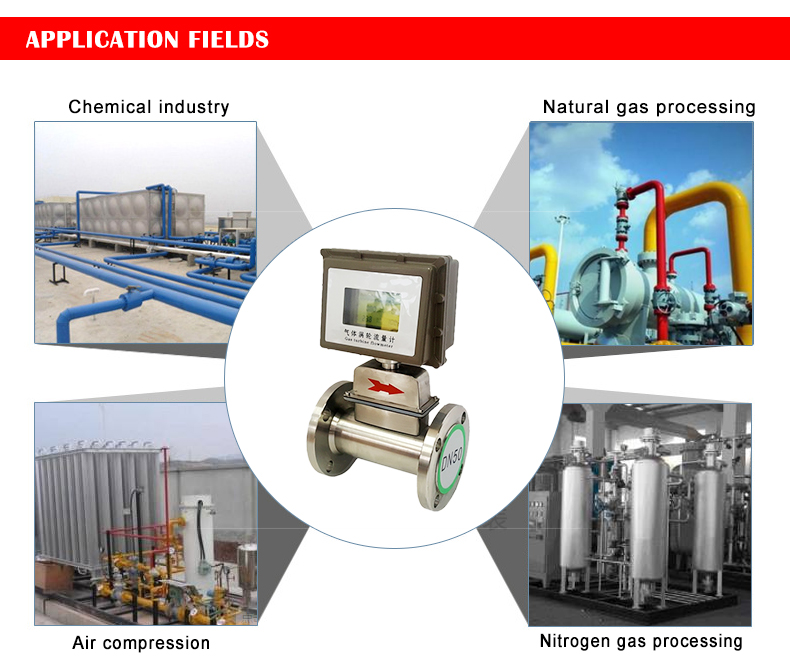
We specialize in producing electromagnetic flowmeter, vortex street flowmeter, turbine flowmeter, thermal gas mass flowmeter, metal tube rotameter, orifice flowlmeter, ultrasonic flowmeter, verabar flowmeter, target type flowmeter, magnetic level indicator, differential pressure transmitter, etc.
