

1. Structural design
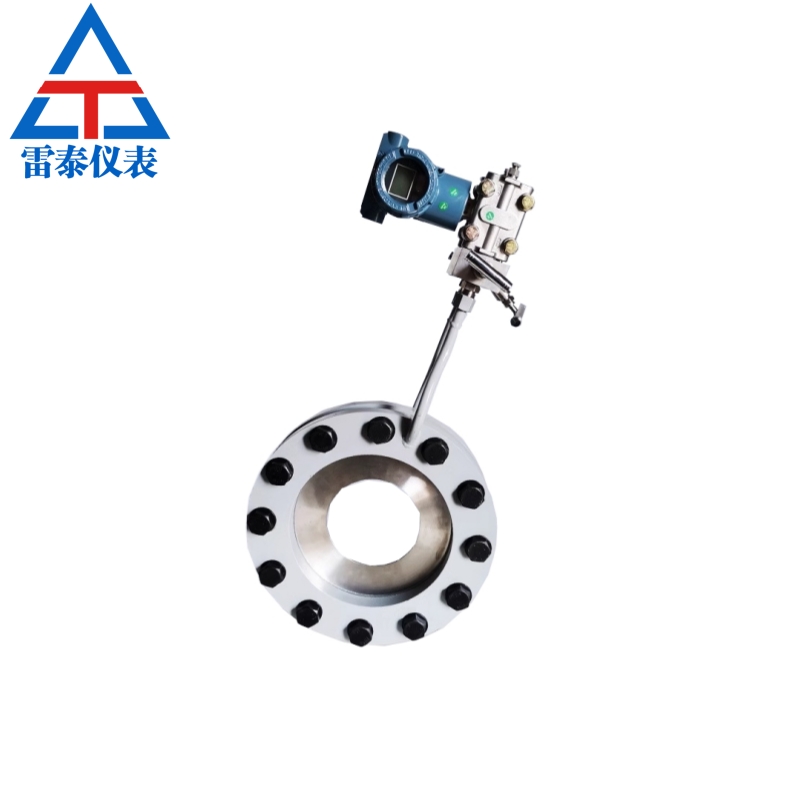
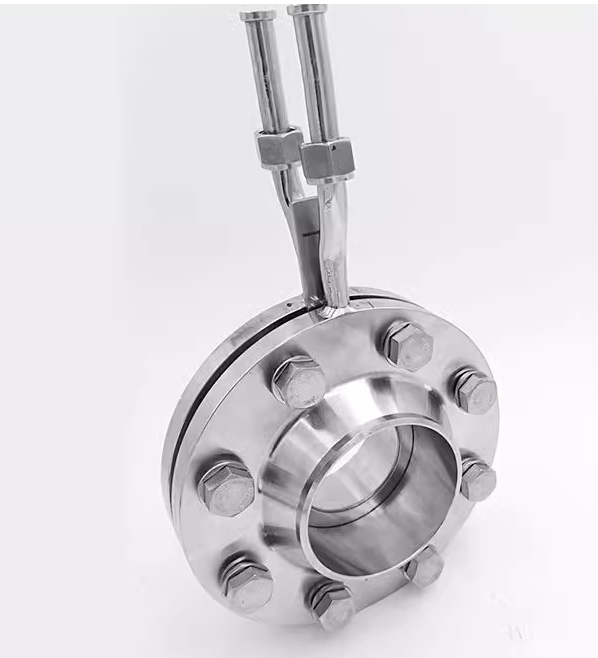
Balanced orifice flowmeter: adopts a symmetrical porous structure, allowing fluid to pass through multiple openings, making the flow field more uniform and stable.
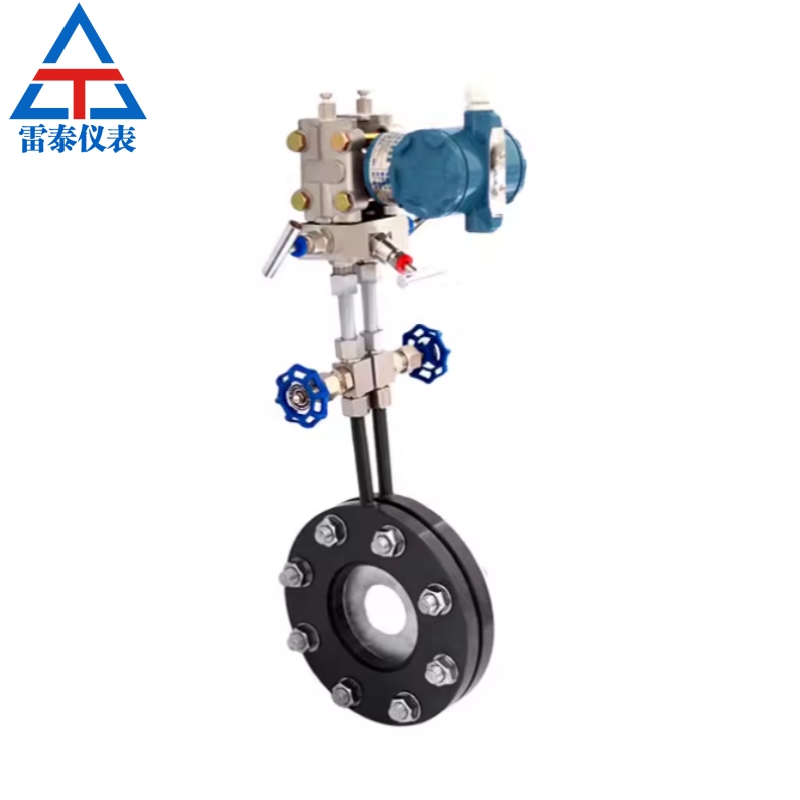
Standard orifice flowmeter: usually a central hole is opened on a circular plate, with a relatively simple structure.
2. Working principle
Balanced orifice flowmeter: Based on the principle of energy balance, multiple holes are used to balance the fluid, and the kinetic energy and pressure energy changes of the fluid passing through the flowmeter are measured to calculate the flow rate.
Standard orifice flowmeter: Based on the throttling effect formed by the fluid flowing through the orifice plate, the flow continuity principle and Bernoulli equation are used to calculate the flow rate by measuring the pressure difference before and after the orifice plate.
3. Measurement performance
Balanced orifice flowmeter
Accuracy: The measurement accuracy is 5-10 times higher than that of standard orifice flow meters, and the repeatability can reach 0.15%.
Range ratio: The range ratio is wide, and the normal range ratio is about 20:1. The minimum Reynolds number can be lower than 200, and the maximum Reynolds number is greater than 107.
Linearity: The linearity is 5-10 times higher than that of standard orifice plates.
Standard orifice flowmeter
Accuracy: The repeatability and accuracy are at a moderate level, and in general, the accuracy is not as good as that of a balanced orifice flowmeter.
Range ratio: The range is usually only 3:1-4:1.
Linearity: The relative balance orifice flowmeter is poor and is greatly affected by factors such as Reynolds number.
4. Installation requirements
Balanced orifice flowmeter: Low requirements for straight pipe sections, with front and rear straight pipe sections generally being 3D in front and 1D in back, with a minimum requirement of less than 0.5D.
Standard orifice flowmeter: requires a longer straight pipe section to ensure measurement accuracy, generally requiring a front 10D and a back 5D.
5. Pressure loss
Balanced orifice flowmeter: The porous symmetrical design reduces turbulent shear forces and vortex formation, resulting in a permanent pressure loss of approximately 1/3-1/4 of that of a standard orifice.
Standard orifice flowmeter: When fluid passes through the orifice plate, significant pressure loss occurs, resulting in relatively high energy consumption.
6. Anti interference capability and stability
Balanced orifice flowmeter: The symmetrical porous structure can effectively balance the flow field, reduce eddy currents, vibrations, and signal noise, and is less affected by fluid disturbances and other factors, with good long-term stability.
Standard orifice flowmeter: It is sensitive to the flow velocity distribution and flow state of the fluid, and is easily affected by eddies, turbulence, and other effects generated by bends, valves, and other fittings in the pipeline, resulting in relatively poor stability.
7. Applicable scenarios
Balanced orifice flowmeter: suitable for situations with high measurement accuracy requirements, complex fluid conditions (such as gas-liquid two-phase, mud, solid particles, etc.), limited space in straight pipe sections, and energy-saving needs.
Standard orifice flowmeter: suitable for general fluid measurement applications, especially in industrial production processes that do not require extremely high accuracy, have large flow rates, and relatively stable operating conditions, such as large flow measurement in petrochemical, chemical and other fields.
We specialize in producing electromagnetic flowmeter, vortex street flowmeter, turbine flowmeter, thermal gas mass flowmeter, metal tube rotameter, orifice flowlmeter, ultrasonic flowmeter, verabar flowmeter, target type flowmeter, magnetic level indicator, differential pressure transmitter, etc.
