
1. consider the characteristics of the measuring medium
① Dielectric constant
a. High dielectric constant medium: medium with dielectric constant greater than 10, such as most aqueous solutions, has strong ability to absorb and reflect radar waves. Radar level meter with general accuracy, such as guided wave radar level meter, can be selected for more stable and accurate measurement.
b. Low dielectric constant medium: medium with dielectric constant between 1.5-4, such as light oil, liquefied gas, etc., has weak reflection of radar wave. It is necessary to select radar level gauge with high transmission power and high sensitivity, such as frequency modulated continuous wave (FMCW) radar level gauge, which can better capture weak return signal.
② Volatility of medium
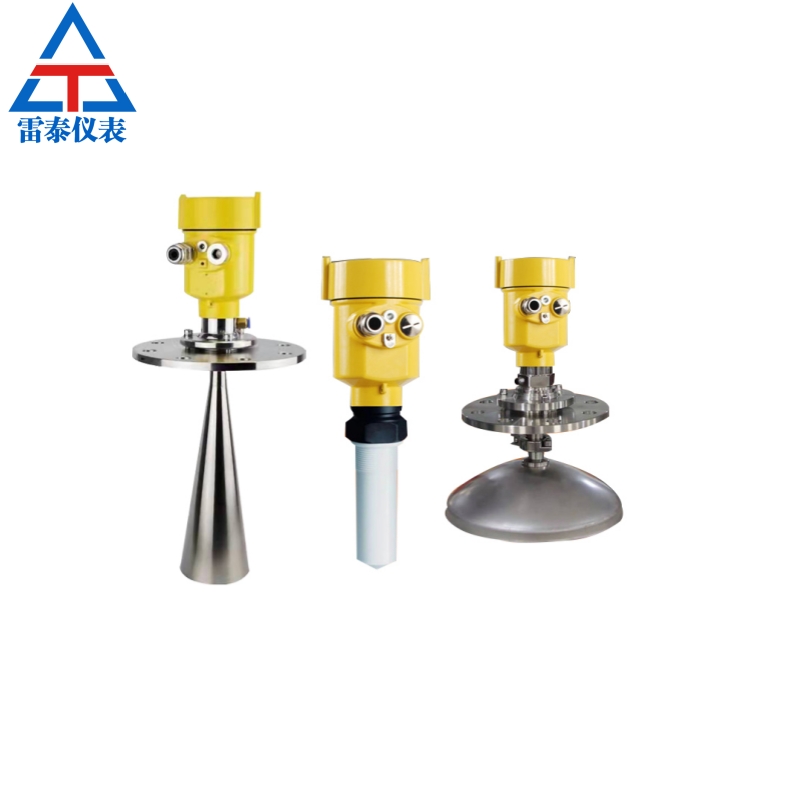
a. Highly volatile media, such as gasoline and benzene, will form a vapor layer on the liquid surface and affect the propagation of radar waves. Radar level meters with special antenna design, such as parabolic antenna radar level meters, should be selected to reduce the interference of vapor layer and ensure the accuracy of measurement.
b. Medium with weak Volatility: general radar level meter can meet the measurement requirements.
③ Corrosivity of medium
a. Highly corrosive media: such as sulfuric acid, hydrochloric acid, etc., radar level meters with corrosion-resistant materials shall be selected, such as radar level meters with anti-corrosion materials such as polytetrafluoroethylene as probes and antennas, or products with special anti-corrosion coating treatment for probes.
b. Non corrosive or weakly corrosive media: radar level meter made of ordinary materials can be selected, such as probe and antenna made of stainless steel.
④ Viscosity of medium
a. High viscosity media: such as asphalt, glue, etc., are easy to adhere to the probe and affect the measurement. It is advisable to select a non-contact radar level meter, such as a horn antenna radar level meter, to avoid direct contact between the probe and the media and adhesion.
b. Low viscosity medium: both contact and non-contact radar level meters can be used.
2. consider working conditions
① Temperature and pressure
a. High temperature and high pressure conditions: for example, in the vacuum distillation column of the refinery, the temperature can reach hundreds of degrees Celsius and the pressure can reach several megapascals. It is necessary to select a radar level meter that can withstand high temperature and high pressure. Its shell and internal electronic components can withstand the corresponding temperature and pressure, and the antenna material and structure should also adapt to the high temperature and high pressure environment.
b. Normal temperature and pressure conditions: general radar level meter can meet the requirements.
② Can body shape and size
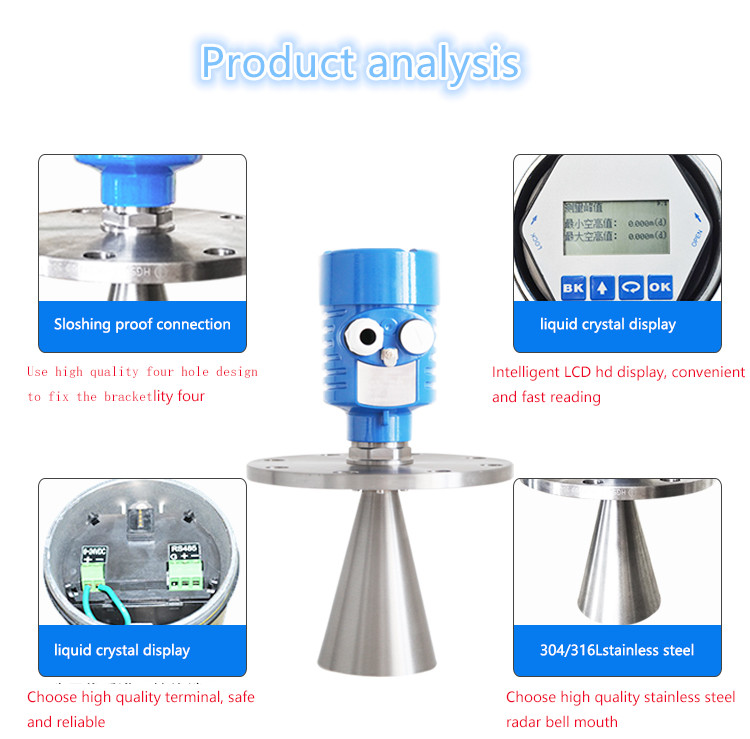
a. Large storage tanks: for example, for crude oil storage tanks with a diameter of tens of meters, radar level meters with large measurement range and small beam angle should be selected, such as guided wave radar level meter or large aperture horn antenna radar level meter, which can reduce the impact of beam diffusion on measurement and improve measurement accuracy.
b. Small container: radar level meter with large beam angle and small volume can be selected, such as rod type radar level meter, which is easy to install and can effectively use space.
③ Site environment
a. The environment with dust, steam or fog: for example, in the raw material warehouse of the cement plant, the steam drum of the boiler room and other places, the radar level meter with strong anti-interference ability should be selected. For example, the millimeter wave radar level meter with higher frequency has shorter wavelength and is less affected by dust, steam and so on.
b. Strong electromagnetic interference environment: for example, in the storage tank near the power distribution room, it is necessary to select a radar level meter with good electromagnetic compatibility, which can pass the relevant EMC certification products to ensure normal operation under strong electromagnetic interference.
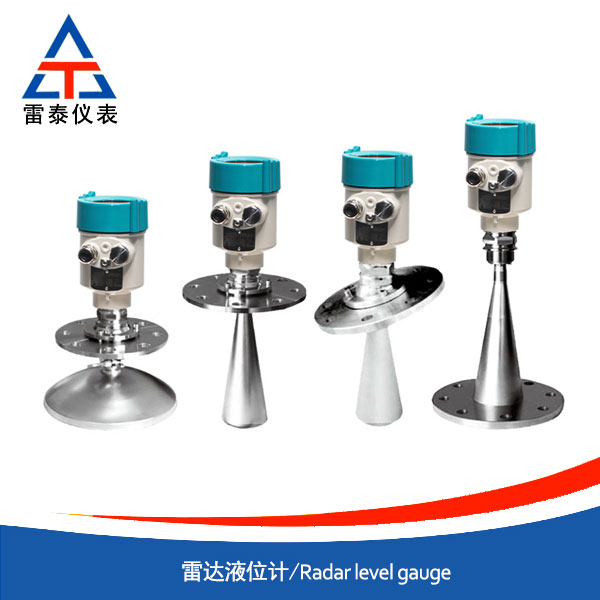
We specialize in producing electromagnetic flowmeter, vortex street flowmeter, turbine flowmeter, thermal gas mass flowmeter, metal tube rotameter, orifice flowlmeter, ultrasonic flowmeter, verabar flowmeter, target type flowmeter, magnetic level indicator, differential pressure transmitter, etc.
